Wednesday, April 15, 2015

7 BEST SMARTPHONES

1. Samsung Galaxy S6 and S6 edge

April 15,2015
Samsung Galaxy S6 and S6 edge

South Korean manufacturer Samsung launched its new flagship smartphones Galaxy S6 and Galaxy S6 edge in India last month. The two smartphones are priced at Rs 49,900 and Rs 58,900, respectively and positioned as the rivals to iPhone 6 and iPhone 6 Plus. Galaxy S6 edge is also the world’s first smartphone to have curved screen on two sides.

The new smartphones sport 5.1-inch SuperAMOLED screen (1440x2560p resolution) and runs on Android 5.0-based TouchWiz UI. 
The company is using the 64-bit 2.1GHz octa-core Exynos 7 processor that is 35% faster than its predecessor; both smartphones have 3GB RAM. The smartphones come in 32, 64 and 128GB variants, with no microSD card expansion for the first time.

On the back, Samsung Galaxy S6 and S6 edge have 16MP camera with LED flash, whereas the front has a 5MP selfie camera. Connectivity options in the smartphones include 2G, 3G, 4G, Wi-Fi, NFC, infrared, microUSB 2.0 and Bluetooth 4.1. The two smartphones have non-removable 2,600mAh battery that can last 4 hours on being charged for just 10 minutes.

2. Lenovo A7000

April 15,2015
Lenovo A7000Lenovo’s 4G-enabled A7000 smartphone was launched in India in early April for Rs 8,999. It is the world’s first smartphone with Dolby’s Atmos audio technology.

The smartphone has a 5.5-inch 720p IPS display, is 7.9mm thick and weighs 140gm. It packs 1.5GHz MediaTek octa-core processor under the hood and has an 8MP autofocus camera on the back and a 5MP front-facing camera.

Lenovo A7000 comes with 8GB internal storage and 2GB RAM. There’s dual/micro SIM, and a micro SD card slot that supports up to 32GB. The phone has a 2,900mAh battery and Android Lollipop-based custom UI. Connectivity options supported by the phone include Bluetooth 4.0, Wi-Fi, and Cat 4 4G LTE


3. Moto E (Gen 2) with 4G

April 15,2015
Moto E (Gen 2) with 4G


Motorola India has launched  its 4G-enabled counterpart in the country at Rs 7,999.

Though the 3G and 4G Moto E variants share many features, the key differentiator between the two (apart from the LTE network support) is the chipset. The new 4G Moto E packs the 64-bit quad-core 1.2GHz Snapdragon 410 processor, whereas the 3G variant comes with a quad-core 1.2GHz Snapdragon 200 silicon.

Other key features of the second-generation Moto E with 4G are 4.5-inch 540x960p display with Corning Gorilla Glass 3 protection, Android 5.0 (Lollipop) operating system, 5MP rear camera, VGA front camera, 1GB RAM, 8GB internal storage, 32GB microSD card support and 2,390mAh battery.

4. Moto Turbo

April 15,2015
Moto Turbo
Motorola launched Moto Turbo, its most expensive smartphone, in India last month at Rs 41,990. The smartphone sports a 5.2-inch Quad HD (1440x2560p) display with 565ppi and Corning Gorilla Glass 3 protection.

Powered by a 2.7GHz Snapdragon 800 quad-core processor and 3GB RAM, the smartphone comes with 64GB internal storage. Moto Turbo is designed with ballistic nylon, which the company claims is a first for the industry.

It features a 21MP rear-facing camera with an aperture of f/2.0, and a 2MP front-facing camera for selfies and video chat. Moto Turbo comes with water-repellent nano-coating. It runs Android 5.0 Lollipop out of the box. In terms of connectivity, the phone supports 3G, Wi-Fi 802.11 a/b/g/n/ac, Bluetooth 4.0, NFC and 4G.

One of the highlights of the phone is its big capacity 3,900mAh battery and turbo-charging feature that provides up to 7 hours and 15 minutes of power with just 15 minutes of charging and 48 hours of mixed usage, according to the company.

5. Huawei Honor 6 Plus

April 15,2015
Huawei Honor 6 Plus


Successor to the Honor 6, the Honor 6 Plus sports a 5.5-inch full-HD (1920x1080p) In-cell display. Powered by a 1.8 GHz Hisilicon Kirin 925 octa-core processor and Mali-T628 GPU, the phablet comes with 3GB RAM and 32GB internal storage, expandable via microSD card.

Priced at Rs 26,500, Huawei’s Honor 6 Plus has an 8MP bionic parallel dual-lens camera at the back with a dual-LED flash and an 8MP front-facing camera. The rear camera has a fast focus of 0.1 seconds and an aperture of f/0.95 for more panoramic depth.

The phone runs Android 4.4 KitKat with Huawei’s Emotion UI 3.0 running on top. It has a 3,600mAh battery. In terms of connectivity, the Honor 6 offers support for 3G, Wi-Fi, 4G LTE (with support for both TD LTE and FDD LTE bands), Bluetooth and GPS. It also supports dual-sim capability if you don’t use a microSD card.

6. Xiaomi Redmi 2

April 15,2015
Xiaomi Redmi 2


Xiaomi Redmi 2, the 4G-capable successor of Redmi 1S, was launched in India in March at Rs 6,999.

While Redmi 2 shares a few features with its predecessor, it has a few upgrades apart from the 4G-compatibility. The new model is powered by the 64-bit 1.2GHz quad-core Snapdragon 410 processor, while Redmi 1S comes with the 1.6GHz quad-core Snapdragon 400 chipset.

The front camera gets a resolution bump, from 1.6MP in Redmi 1S to 2MP in Redmi 2. The battery is also slightly beefier at 2,200mAh in the new smartphone, up from 2,000mAh of Redmi 1S. Xiaomi's Redmi 2 smartphone also supports QuickCharge 1.0 technology for faster battery charging.

Xiaomi will be preloading the Android 4.4-based MIUI 6.0 software with Redmi 2, while the Redmi 1S runs on the Android 4.3-based MIUI 5.0 custom skin. The new model is thinner (9.2mm) and lighter (134gram) than its predecessor (9.9mm and 158gram).

The remaining features of Redmi 2 are same as that of its older sibling, including the 4.7-inch HD screen with DragonTrail glass, 8GB internal storage, up to 32GB microSD card support, 1GB RAM and connectivity options.

7. Oppo N3

April 15,2015
Oppo N3


Oppo launched the world’s first smartphone with a motorized rotating camera in India earlier this month at Rs 42,990. Its 16MP motorized rotating camera that can be rotated up to 206-degree with the tap of a button or touch of a fingerprint sensor located at the back of the phone. The lens has 1/2.3” sensor and pixel size of 1.34 microns.

Powered by a 2.3GHz Qualcomm Snapdragon 801 processor, 2GB RAM and Adreno 330 GPU, the N3 has a 5.5-inch Full HD screen and runs Color OS 2.0 based on Android 4.4 KitKat. The phone has a 3,000mAh battery and comes with 32GB storage along with a microSD card slot.

In terms of connectivity options, Oppo N3 features 4G LTE (including Indian 4G bands), 3G, Wi-Fi, Bluetooth 4.0 and GPS. The phone features dual-sided Skyline Notification 2.0 embedded at the bottom of the phone for notifications. The phone’s fingerprint sensor can be used for unlocking the phone and encrypting apps.

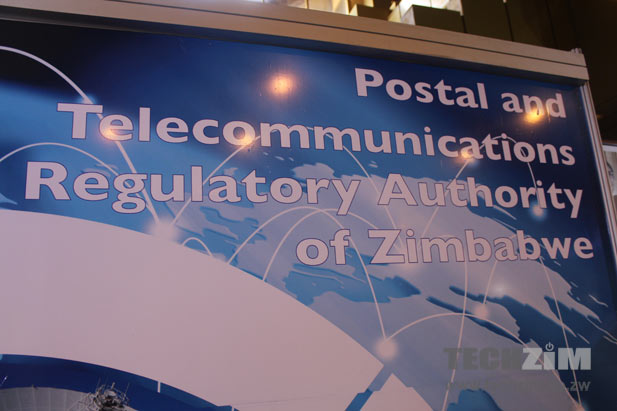
DECLINE IN MOBILE REVENUE, INTERNET PENETRATION

Econet lost its plea against a directive from POTRAZ to lower traiffs
The national economy is in a really bad state, and it’s not surprising that those nasty effects are now chewing into the telecoms sector in a big way.
A report published by FinX quotes the most recent Post and Telecommunications Regulatory Authority of Zimbabwe (POTRAZ) Sector Report which has key highlights for the fourth quarter of 2014. The figures provided in the report paint a grim picture of the industry and the numbers are depressed when compared to the previous report. 

What were the major highlights?
According to the report, mobile network operators’ revenues fell by 18% to close at $907.3 million for the year 2014. Fourth Quarter revenues also took a slump, with the 11.3% decline closing the quarter at $219.7 million. This is against the third quarter revenue total of $248.7 million.

The biggest decline in revenue was witnessed by Econet which experienced a 15.45% decline in revenue to finish the quarter with a total of $158.2 million.
Telecel revenues also declined, but by 3.7% to $29,4 million and interestingly NetOne bucked the trend with a revenue increase of 5.9% that brought its quarterly total to $32.1million.

The highest Average Revenue per User per month (ARPU) was registered by Econet at $8.17 and at $3.35 Net One had the lowest ARPU.

Mobile money transfer subscriptions went up by 7.3% from 4.9 million subscriptions and stood at 5.3 million at the end of 2014 The total value of transactions for mobile money services have increased in value to $445.7million from $403 million recorded in the third quarter which translates to a 10.6% increase.

The mobile money agents total also went up, by 13.7%, from 20,569 in the third quarter to 23,379. On a year by year comparison mobile money subscribers also increased by 71.9% from 3.1 million in 2013 to 5.3million in 2014.

An annual comparison of the total value of mobile money transactions shows an 80.8% increase in deposits to $1,4billion in 2014 from $797,9 million  recorded in 2013. The total number of agents increased by 14,210 new agents to reach 23,379 from 9,169 agents recorded in 2013. Mobile money subscribers also increased by 71.9% from 3.1million in 2013 to 5.3 million subscribers in 2014.

Econet, through its EcoCash service, holds 98% of total mobile money deposits.Telecel’s TeleCash holds 1.9% and NetOne’s OneWallet has 0.1% of the total deposits. This distribution also corresponds to the agent totals held by the three networks with Econet possessing the largest network with 17.181 agents followed by Telecel with 4.586 and NetOne with 1.612 agents.

Voice revenue generated by TelOne, the fixed telephone network in the fourth quarter of 2014 was $44.4 million. This is an 11.2% increase from $39,9million recorded in the third quarter of 2014.

In the fourth quarter, TelOne’s voice service had an Average revenue per user (ARPU) per month of $44.93 which was a 15.1% increase from an ARPU of $39.05.

Active mobile subscribers for the fourth quarter of 2014 increased by 3.5% to reach 11.798 652 from 11. 403 788 recorded in the previous quarter.

The mobile penetration rate increased from 87.3% recorded in the third quarter to 90.3% in the fourth quarter.

Subscriber totals for Econet receded by 20,519 to 6 451 863. Telecel continued to shed subscribers with a loss of 71.576 subscribers in the quarter to end the year with a total of 2.152 148 subscribers. Net One once again swam upstream with a subscriber increase of 18% which gave the MNO a total of 3,194 641 subscribers.

Econet`s market share declined to 54.7% in the fourth quarter from 56.8% in the prior quarter. Telecel`s market share declined to 18.2% while Net One’s market share increased to 27.1%.

One of the most striking aspects of the POTRAZ report was that the national active internet subscriptions fell by 5.2% from 6.2 million in the third quarter to 5.9 million in the fourth quarter.

This a slowdown in the uptake of internet services but there is still a maintained annual increase in internet subscriptions which grew by 7.4% from 5,472,710 in 2013 to 5,879,552 subscriptions in 2014.

This quarterly decline in internet subscribers has been linked to the way Telecel and Econet lost subscribers and ultimately active mobile internet subscriptions.

Source: FinX

Thursday, April 9, 2015

ICT GENERATION DOES IT AGAIN


There’s always talk about about the importance of imparting skills in technology at an early age. It’s one of those no-brainers in an increasingly tech world, and Zimbabwe also needs to pay attention to that reality.


 Kids---ICT-Generation
 The fact is, locally this is not done enough. Whether in public or private education institutions, there’s still a lot of work that is not being carried or picked up, something which thankfully is now being addressed by different players. One such group is the ICT Generation.

The name doesn’t instantly register as a household name, even for people knee-deep in local tech. But the work that its members has been involved in has managed to catch the attention of a lot of people.

Last year, this youth collective, which is based at local tech hub Hypercube, was behind Zimbabwe’s first participation in the Hour of Code and the follow up Battle of Code contest held earlier this year. Now ICT Generation is coordinating the Week of Computer Science Education for School Children.

From the 20th to the 25th of April 2015, The ICT Generation , through its ICT GEN Tech Lab, will be conducting a training course in technology targeted at children that have a keen interested in three broad aspects of technology.

You can register children for this course by following this link.

Through three modules on computer programming, robotics and electronics, the course is meant to ensure that elementary concepts are passed on by the relevant material and tutorship to participating students.

According to Sheima Muguza, the team lead at ICT Generation, this program is meant to build on the success of the Hour of Code and it borrows from the extensive curriculum for interactive learning provided by code.org, the entity behind Hour of Code that has received a lot of support from investors and globally recognised tech entrepreneurs like Mark Zuckerburg.

The cost has been put at $25 for each of the three modules, but participants who register for all three will pay only $50. These costs cover the materials, resources and refreshments used for the course. It is open to any child aged 6 years and above.

Parents that put their children through this course can look forward to their children’s exposure to skills in graphic based computer programming, virtual robotics and basic electronics (with an introduction to the use of Raspberry Pi and Arduino Kits) as well as just the right approach to concepts related to this like geometry, algebra and basic physics. The whole course also emphasizes aspects such as team building and collaboration.

There will be a free hour of demonstration on 2 separate days on the 20th (1 – 2 pm) and the 25th (10-11 am) of April which will show how the programme will benefit children.

If you are interested in getting your child involved in this or understanding more about the course, you can get information on the ICT generation website, www.ictgen.co.zw or by contacting Hypercube Hub.

AFRICOM OFFERS CHEAPEST INTERNET SERVICES


Just last week we were talking about the new unlimited data offer from Powertel that is supposed to start a return to glory and hopefully, good graces with disgruntled clients for the Internet Access Provider. It turns out, Africom also introduced its own special offer on data in the same period.


Africom--Super-Data-PromotiJust last week we were talking about the new unlimited data offer from Powertel that is supposed to start a return to glory and hopefully, good graces with disgruntled clients for the Internet Access Provider. It turns out, Africom also introduced its own special offer on data in the same period.

The Africom Super Data Promotion is a follow-up to the MiChoice Data offering that Africom has had going for about half a year. This time, Africom has come up with a promo that isn’t for browsing only or focused on social media, but is aimed at subscribers that want to enjoy internet downloads and streaming.

With an entry bundle priced at 50cents for 20MB and a 1GB bundle set at $10 the competition isn’t just Powertel (which has somewhat similar bundles that are more expensive), Africom has introduced the cheapest internet package in Zimbabwe.

It seems Africom is responding to a tougher economic climate just like every other service provider that is competing for subscribers’ attention.

The competitive prices for the Africom Super Data will likely be a very strong offer for subscribers keen on downloads that have established that Africom service is readily available in their areas. However, points for this promotion are dropped by the limited validity periods for the bundles that range from 24 to 48 hours, which extend even for the 1GB service.

Wednesday, April 8, 2015

TELONE UNVEILING A NEW LOOK


Time for a new experience? - TelOne is doing away with its old identity and is unveiling a new look.

Time to experience something different? – TelOne is doing away with its old identity and is unveiling a new look.


Any 2015 conversation around ADSL technology always has the same undertone. A lot of people, learned or otherwise, think the tech belongs to the 1980s. To be honest, in the face of rapidly changing communications standards and delivery options it’s hard to bring up colonial copper cabling solutions which just don’t sound sexy.

This is a bit of a challenge for an operator like TelOne that has the distinction of being the Number 1 only local provider of ADSL broadband in an environment where the internet is experienced through mobile phones first, and fixed internet also means WiMAX solutions from every other competitor.

To its credit, TelOne has been trying a lot to adapt to everything around it. The highlight of all this will be showcased tomorrow evening. TelOne is unveiling two new products along with a new corporate identity.

According to information from reliable sources, TelOne is introducing its network of WiFi hot spots around Harare, dubbed Metro City WiFi. These WiFi hot spots are meant to give TelOne an access point to mobile broadband subscribers that already form a clear majority of internet users in Zimbabwe.

The second new product will be the TelOne Fibre to the Home (FTTH) service that has been a major focus of TelOne’s efforts of being an Internet-First operator.

The new brand identity is what TelOne has been teasing in print adverts this past week and will be represented by a new logo that we will see for the first time tomorrow night.

No doubt all of this sounds exciting for a host of reasons. The Fibre to the Home product is coming into a market that is being led by Liquid and ZOL, the force behind the ZOL Fibroniks package that is meant to make Fibre a reality for Zimbabweans with a $39 entry package as well as the most extensive fibre network in the country whose density is remarkable when compared to other countries in Africa.

TelOne currently sits on the second largest fibre network in Zimbabwe and has been offering somewhat reasonable pricing for its ADSL package. The hope is that this same competitiveness will extend to its fibre service.

At the same time, the Metro City WiFi service gives TelOne a shot at competing with mobile telecoms operators, something that it hasn’t been able to execute with a mobile network operator licence that it never used.

Hopefully TelOne will compete aggressively in terms of service delivery and not just pricing.

Wednesday, April 1, 2015

NETONE APPLIES FOR THE BROADCASTING OF DATA


According to a notice in the Herald, state-owned mobile network operator Netone has applied for a national datacasting licence from the Broadcasting Authority of Zimbabwe.The datacasting licence is one of ten broadcasting licences offered by the regulator.
 Image courtesy of TECHZIM

Datacasting, or the broadcast of data, is a service that delivers information via radio waves in varied forms which include text, data, speeches and images to any receiver or equipment that can accept or process the information.

It usually works in the distribution on topical information in fields that can be as varied as traffic updates, weather, health, education and even retailing.This looks like part of Netone’s efforts at improving their performance by providing a wider range of product services. Currently every network operator needs to and has been making attempts at expanding its product range beyond the declining voice call offering.

NetOne’s two competitors Econet and Telecel have been aggressively pushing data centric OTT services that include WhatsApp bundles and different Facebook promotions, lines of service which NetOne hasn’t offered on its own network. It has however been engaged in mobile money services which have provided a healthy revenue stream for local telecoms.

NetOne is likely to be leaning on its relationships with Chinese hardware and telecoms infrastructure giants Huawei in the roll out of this service.Huawei is already tapped to pick up Netone’s $218 million broadband expansion project which will focus on equipment upgrade and LTE service provision.

Tuesday, March 31, 2015

PAYMENTS THROUGH MOBILE MONEY SERVICES SUSPENDED


DStv Zimbabwe has just announced that it has suspended payments through mobile money serviceEcoCash, something that ought to put a damper on any attempts at beating holiday queues through m-commerce convenience.
According to a post published on the DStv Facebook page, this temporary disruption has been caused by technical challenges and it is indefinite. In responses to questions asked in the comments section of the Facebook post, DStv Zimbabwe also pointed out that payments through Telecash are also suspended. This means that payment through the Telecash GoldCard and the EcoCash Master Card aren’t possible as well.

The only mobile money option that is still working is financial institution CABS’ Textacash, an option that might provide relief to its 300,000 plus subscriber base but still leaves the bulk of mobile money subscribers who use EcoCash and Telecash in a fix.

The traditional payment options, that is the financial institutions like CBZ Bank, NMB Bank, ZB Bank, Stanbic, Standard Chartered, Steward Bank, FBC Bank, Met Bank, CABS and POSB (and are now ironically becoming the alternative solutions) are still available. The biggest frustration there is the fact that banks aren’t as flexible in terms of operating hours, something that rules out payment over the holidays like Easter that starts tomorrow.

Still, if you have made a payment via Textacash and want to follow up n it this holiday, DStvZimbabwe walk-ins will be open on Saturday until 2pm and there is the call centre option that you can access until 5pm

Wednesday, March 25, 2015

Tumblr 4.0 Arrives On iOS With Better Blogging Tools, Filtered Search, And A New Widget

Image courtesy of Apple
 
Tumblr this morning has begun to roll out a sizable update to its iOS application with the release of Tumblr 4.0. The new application, which also now appears under a revamped app icon, includes a number of features previously available only on desktop, like the ability to create secondary blogs on the fly or submit to submission blogs, for example. Meanwhile, other additions are specifically designed for iOS, like the new “Today” widget.

The widget, which takes advantage of Apple’s iOS 8 feature that allows you to view useful information and other content right on your Today screen, will display what’s trending on Tumblr, rather than activity related to your own blog, or updates from your Tumblr network.

In addition to the features mentioned above, which are focused on allowing you to do more blogging from your iOS device by quickly creating more blogs or participating in blogs that accept posts from others, the updated app also received a few features that had already rolled out to Android. This includes Tumblr users’ most-requested feature: the ability to make video posts simply by copying and pasting in a video URL.
 

Plus, iOS users can now filter searches by post type – like photos, videos or chats – as well as move between the top results and the most recent results. These are features that have been available in the popular third-party Tumblr app for power users XKit for some time, but were sorely lacking in Tumblr for iOS itself.

Also now arriving in the updated app are a handful of more minor improvements, including a sticky search bar, sticky avatars, a better iPad layout, better GIF loading (no seriously, thank you), and more.

The updated Tumblr app began rolling out to iOS users as of 7 AM EST this morning, so if you don’t see it yet, you should shortly.

Monday, March 23, 2015

10 emerging technologies shaping African tech

Afron Robot From smartphones to cargo drones, how technology is shaping African countries now more than ever. These 10 trends show how innovation can ripple through societies and boost economies, leapfrogging them into the future.


African tech innovation startups: also check out the call for DEMO Africa 2015!

1. Droneports
Because connectivity defines modern prosperity, and because Africa will not be able to build roads fast enough to manage its growth, the continent will be the first to adopt cargo drones at massive scale. But drones need somewhere to land. So in 2015 we will see the first concepts for droneports out of Africa. They will be clean-energy, open to sky and nature, and mix the civic quality of early Victorian railway stations with souks and the latest airport technology – in other words, the petrol station of the 21st century.

2. Robotics
It’s not just flying robots that hold economic promise for Africa. The Ebola outbreak in West Africa has reinforced the lessons of Fukushima. In the kind of emergency where it’s dangerous for humans to be in contact with one another, robotics can help to screen for radiation or for infectious disease. Currently, there are not enough advanced robots to do the remote tasks we need them to do. It might seem counterintuitive to promote robotics in the context of high youth unemployment and pervasive poverty. But African economies will engineer efficiencies through automation that they would otherwise not be able to afford. Look to the Africa Robotics Network and research universities inside and outside Africa, which will spread robotics beyond humanitarian use into the production of robots. In particular, there will be more research into robotics for healthcare and search-and-rescue functions.

3. Space
The Square Kilometre Array (SKA) astronomy project in South Africa’s Kalahari desert promises to massively advance space science in Africa. The SKA’s goal is to map the early universe using radio telescopes, and the first phase of the project is capped at $740 million. The necessary computing architecture will be among most advanced on the planet. SKA will eventually produce more data than the rest of the world’s astronomy projects combined. In 2015, we will also see private space initiatives, including the South African investor Elon Musk’s Space X begin consideration of private launch sites in Africa, ahead of the many rocket launches expected to take place before NASA sends humans to Mars in 2035. Located on the equator and with plenty of space, Africa has the potential to be a major player in space exploration.

4. Translation
Voyager I has entered interstellar space. Fastened to it is a gold disc with the sounds of Earth recorded on it. Among them is a greeting in the Chewa language of central and southern Africa: “How are you, people of other planets?” Google Translate is now available in 10 African languages. However, Translators Without Borders points out that Africa has 2,000 languages. Only 242 of these are used in the media and just 63 are used in the judicial systems. That means the poorest and most vulnerable Africans struggle to make themselves understood. Creating living dictionaries for hundreds more African languages will be a significant undertaking in 2015, not just for heavyweights such as Google and IBM’s Project Watson, but for start-ups, too. It is cheap and profitable: Babel has never looked so promising in Africa.
Drone
A Seeker 400 drone, manufactured by South African company Denel Dynamics, flies over Cape Town

5. Tech spaces
Tshimologong Pre cinct is a technology accelerator of Wits University in Johannesburg, which has the backing of companies such as IBM and Microsoft. As much as 40% of South Africa’s GDP is generated within a short drive of Tshimologong and many students live in the area, so reorienting the precinct around technology makes sense. Similarly, in Kenya, the Gearbox makerspace for design and rapid prototyping will move into the railway district in downtown Nairobi. The year 2015 will see similar initiatives from Dakar to Durban as city planners, property developers and technologists realize they can work together to produce jobs and vitality.

6. Augmented reality
This year is ideal for augmented reality to hit the market in Africa, and now is the time to start planning for it. How might an African second life, visited by commuters on crowded minibuses, differ from augmented realities in industrialized countries?

7. Wearable technologies
Wearables are not a cheap consumer product for most people, but in 2015 we will see them gain market share through cheap smart watches and health trackers. That will subtly challenge present behaviour for wealthier early adopters. Will 2,000 steps a day suffice for African city-dwellers? Will cholesterol tracking influence food choices?

8. Wi-fi
A study by iPass, an American wi-fi provider, suggests that wi-fi hotspots will proliferate on the planet. It predicts that in 2018 there will be a wi-fi beacon for every 20 people on Earth and one beacon for every 400 Africans. So, the year 2015 will see a more concerted push towards spreading wi-fi more equitably around Africa. Sub-orbital satellites using solar sailplane technology will close financing. These great and graceful craft always aloft in the stratosphere will usefully compete with high-altitude “loons”, white-space radio frequency and low-tech stratospheric repeaters.  A related activity will be to make the most of the available bandwidth by installing the best available spam filters.

9. Smartphones again
The migration from dumb phones to smartphones is so obvious a trend that it can often be overlooked, but new guesstimates form Cisco underline the extent of the coming change. In South Africa, Cisco says, internet usage will grow from 710 megabytes a month to 7.2 gigabytes in 2019. Most of this will be on newly purchased smartphones and their related devices, such as wearables and augmented reality. And where South Africa goes, the larger African economies follow.

10. Futurism
The year 2015 will see a move towards futurism among African intellectuals, with avant-garde artists and writers anticipating Africa’s forthcoming acceleration in their works. Concepts will include new technologies, the loss of wildlife species, the creation of cities and the longer view of transhumanism and interstellar travel. Wider discussions about technology will take place. A good example is South African film director Neill Blomkamp and his latest blockbuster, Chappie, set in Johannesburg: “Humanity’s last hope is not human.”

This article originally appeared at the World Economic Forum website.
Author: Jonathan Ledgard is Director of a future Africa initiative at EPFL and a long-time Africa correspondent at the Economist. He leads a group that is building the world’s first droneport – in Africa. His last novel, Submergence, was a New York Times Book of the Year and is being adapted for the big screen.

Tech innovation startups in Africa: also check out the call for DEMO Africa 2015!

Thursday, March 19, 2015

CHANNEL O CLOSES


Nothing lasts forever, especially on TV. Who would have thought that something that had become a permanent feature of sorts, Channel O Africa, would be calling it a day at the end of this month.

Image:Channel O


For us in Southern Africa, this doesn’t concern us directly. What’s being cut off is the feed for the rest of Africa specifically Channel O Africa, not Channel O as we know it. The feed for Channel O Africa will be taken over by Africa Magic and this will become the new face and go-to station for African music.

For most people with a pulse on music preferences and the delivery that Channel O has been making in comparison to competitors like Trace and MTV Base, this was bound to happen sooner or later.

However, there’s more to this channel and feed realignment than just depressed ratings. Channel O is part of M-Net, the coterie of channels that belongs to Naspers and is a sister company to MultiChoice, the guys who give us DStv.

One thing that M-Net has mastered in broadcasting over 20 some years is that local content has a huge appeal to a target market. This was proven by shows whose production M-Net had a hand in like Egoli.

Now, this rearrangement of music priorities hinges on a similar drive; to have region specific content created by local productions houses being offered to those markets. It’s what has resulted in a huge focus on “local” series like for the South African market in the first place. According to Multichoice, this is a rapidly growing market.

Which leaves so much opportunity at the feet of local content producers. The issue with Channel O points to music, so any producers of that sort of entertainment, (think audio and video) need to be eyeing the whole continent with their material.

As an example, Zim Dancehall might be all the buzz and excitement for us here, but with a potential continent-wide market, the producers of that content have to step in terms of quality. The same could be said for other forms of content, be it Reality Shows, TV Dramas and even news.

We have digital migration slowly creeping into the picture and with it all the excitement around digital content that will be aired on ZTV, but with distributors like MultiChoice offering platforms for larger audiences, producers should look beyond our borders. It would be great to see P.O BOX Videos and Battle of The Chefs being flighted as material for the whole of Africa.

It used to be extremely difficult for artists and producers to tell how their material would be received and to develop a presence outside their immediate environment, but the internet has made that task a lot easier.

Just like Anne Kansiime has proved, it’s time for producers to start using online platforms and social media to show how good they are and prove that they deserve that place in African media.
- See more at: http://www.techzim.co.zw/2015/03/as-channel-o-closes-the-opportunity-for-high-quality-local-content-is-highlighted/?utm_content=buffera6269&utm_medium=social&utm_source=facebook.com&utm_campaign=buffer#sthash.dAtS7qAe.dpuf


Wednesday, March 11, 2015

DSTV MAKES IT BIG WITH MOBILE APP


Digital Satellite Television (DStv) now lets subscribers enjoy their favourite TV channels streamed live and with their mobile app one will never miss a favourite show again. With the DStv Now App, which is available for Android devices and iOS devices, watching television anytime, anywhere has never been more convenient.


Sport, movies, series and so much more are now available anytime, anywhere, thanks to DStv Now, a new App across Africa that allows subscribers to watch Live TV, enjoy DStv Catch Up and view the TV Guide from their mobile phones and tablets.

The mobile app is currently on offer to DStv Premium subscribers with a DStv PVR or DStv Explora decoder, on both iOS and Android tablets and mobile phones through 3G, 4G or WiFi internet connections.

Simply visit your mobile App store to download the free App. After logging in with your DStv Connect ID, link your Premium Smartcard to your DStv Connect Account by going to www.dstv.com for iOS users, while Android users will be given the option to register and link smartcards on the App.


Thereafter, you will be able to stream or download your favourite DStv Catch Up titles and view a host of other live TV channels, including SuperSport, plus M-Net movie channels including Comedy, Actions Plus, Drama & Romance and Premiere. The relevant data costs will apply when streaming content.

There are also selected Live TV channels to watch on your mobile device and tablet plus an eight-day TV Guide showing Live programming on all DStv channels is available to DStv Subscribers.

- See more at: http://www.technomag.co.zw/2015/03/04/dstv-makes-it-big-with-a-mobile-app/#sthash.cVQ0zjIl.UiepZ1fy.dpuf

ORAL HIV TESTING COMES TO ZIMBABWE


The Zimbabwean Government will soon start distributing HIV self-testing kit OraQuick, following the acceptance of using the gadget by most participants in a countrywide acceptability study.
The kits are part of a move to conscientise Zimbabweans about their HIV status and seek treatment early.

Self-tests can be conducted without a healthcare provider’s assistance however a positive result must be confirmed by a blood test conducted by qualified medical.

The test reaction is achieved by immersing either a blood or saliva sample in a solution,the  results can be interpreted within twenty to forty minutes.


Ministry of Health and Child Care director (Aids and TB), Dr Owen Mugurungi said that before introducing something new, they first run feasibility and acceptability tests to check if people are ready to receive (the new product). He also added that the preliminary assessment results show that most people accept the HIV self-testing kit and this guides them in decision-making.


Secretary for Health and Child Care Dr Brigadier Gerald Gwinji revealed the merits on why health institutions should accommodate those who test positive, adding that educational campaigns will soon be undertaken.


“The messaging will make it clear that there is a requirement to go to the next stage because you cannot self-manage, treat yourself and perhaps do other tests such as CD4 count.


“When OraQuick was introduced (in the United States), we hadn’t developed appropriate evidence-based strategies we had developed a strategy ,”he added.

According to statistics obtained from the Zimbabwe National AIDS Council, the estimated number of people living with HIV is 1,390,211.Estimated number of annual HIV deaths is 63,853,while the HIV prevalence rate is 15%.

Stereotypical tendencies by peers, church members and in some cases family members have pioneered on the HIV testing resistance. Some people would rather stay in ignorance than be stereotyped and rejected by society.

OraQuick will go a long way in alerting people about their status. Concerns about its availability and prize have however been raised, with issues like whether an ordinary rural folk can access and or afford it.

- See more at: http://www.technomag.co.zw/2015/03/03/oral-hiv-testing-comes-to-zimbabwe/#sthash.rwHFzP9d.0SO9GUWt.dpuf